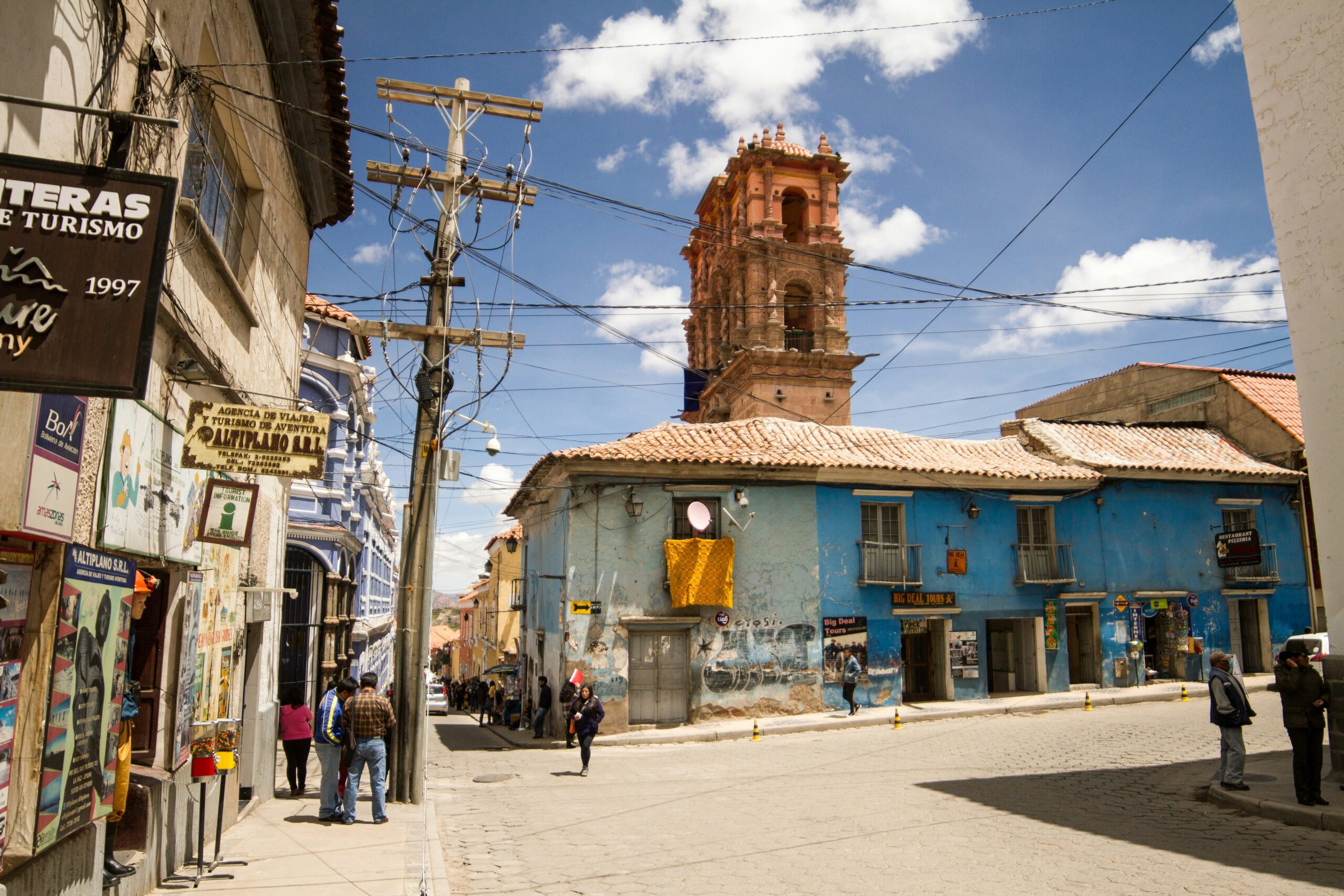
Introduction
Learning descriptive adjectives in Spanish opens up a world of colorful expression, and abigarrado is one of those wonderfully specific words that captures a visual concept many languages struggle to express in a single term. This Spanish adjective describes something that features a chaotic mix of colors, patterns, or elements that clash or compete for attention. Whether you encounter it in literature describing a bustling marketplace, in fashion critiques discussing an outfit with too many competing patterns, or in everyday conversation about a cluttered room, understanding abigarrado will enrich your Spanish vocabulary significantly. Native speakers use this word to convey both literal visual chaos and metaphorical complexity. In this comprehensive guide, we will explore every aspect of abigarrado, from its etymological roots to its practical applications in modern Spanish conversation.
Meaning and Definition
Core Definition
The word abigarrado is an adjective that primarily describes something characterized by an excessive, disorderly, or jarring combination of colors, patterns, or diverse elements. The Royal Spanish Academy (Real Academia Española) defines it as something that has multiple colors poorly combined or mixed in a disorganized fashion. However, its usage extends beyond pure visual description to encompass any situation, text, or collection that seems chaotically diverse or lacks coherent organization.
Etymology and Historical Development
The origins of abigarrado trace back to the Spanish verb abigarrar, which itself likely derives from the prefix a- (indicating direction or transformation) combined with elements suggesting variegation or stripe-like patterns. Some linguistic scholars connect it to older terms related to streaking or striping in fabrics. The word has been part of Spanish vocabulary since at least the 17th century, originally appearing in contexts describing textiles and painted surfaces. Over time, its meaning expanded from strictly visual descriptions to include any heterogeneous mixture that lacks harmony.
Semantic Nuances
Understanding the subtle connotations of abigarrado is crucial for proper usage. This adjective typically carries a slightly negative or critical tone, suggesting that the mixture or combination in question is excessive or aesthetically unpleasing. It implies not just variety, but variety that has crossed the line into visual or conceptual chaos. When someone describes a painting, room, or outfit as abigarrado, they are usually expressing mild disapproval or noting that the composition lacks sophisticated coordination. However, in certain contexts, particularly in artistic or literary criticism, it can be used more neutrally to describe intentional complexity or baroque richness.
Usage and Example Sentences
Practical Examples in Context
El mercado tradicional era un espacio abigarrado de colores, olores y sonidos que abrumaban los sentidos.
The traditional market was a chaotic space of colors, smells, and sounds that overwhelmed the senses.
Su estilo de vestir era demasiado abigarrado, combinando rayas, lunares y estampados florales en un solo conjunto.
Her style of dressing was too garish, combining stripes, polka dots, and floral prints in a single outfit.
La fachada abigarrada del edificio colonial mezclaba elementos arquitectónicos de varias épocas sin coherencia aparente.
The jumbled facade of the colonial building mixed architectural elements from various periods without apparent coherence.
El escritor presentó una narrativa abigarrada que saltaba entre múltiples tramas sin conexión clara.
The writer presented a disjointed narrative that jumped between multiple plots without clear connection.
Los turistas fotografiaban el abigarrado desfile de disfraces durante el carnaval.
Tourists photographed the motley parade of costumes during the carnival.
La sala de estar tenía una decoración abigarrada con muebles de diferentes estilos y épocas.
The living room had cluttered decor with furniture from different styles and periods.
Su discurso resultó abigarrado y confuso, mezclando temas sin transición lógica.
His speech turned out chaotic and confusing, mixing topics without logical transition.
Las calles del barrio antiguo mostraban una arquitectura abigarrada que reflejaba siglos de historia.
The streets of the old neighborhood showed a heterogeneous architecture that reflected centuries of history.
El cuadro abstracto presentaba una composición abigarrada de formas geométricas y colores primarios.
The abstract painting presented a busy composition of geometric shapes and primary colors.
La página web tenía un diseño abigarrado con demasiados elementos visuales compitiendo por atención.
The website had a cluttered design with too many visual elements competing for attention.
Synonyms, Antonyms, and Word Usage Differences
Synonyms and Similar Terms
Several Spanish words share semantic territory with abigarrado, though each carries distinct nuances. Variopinto is perhaps the closest synonym, describing something with many colors or great variety, though it tends to be more neutral in tone. Multicolor simply means multicolored without the implication of excess or poor coordination. Heterogéneo describes something composed of diverse elements but focuses more on difference than visual chaos. Recargado means overloaded or over-decorated, sharing the excessive quality of abigarrado but applying more broadly to situations beyond color. Chillón describes garish or loud colors but focuses specifically on intensity rather than mixture. Caótico means chaotic and can substitute for abigarrado in contexts emphasizing disorder over visual qualities.
Antonyms and Contrasting Concepts
The opposite qualities of abigarrado are expressed through several Spanish adjectives. Sobrio describes something restrained, simple, and lacking excess ornamentation. Monocromático or monocromo refers to single-color schemes, the direct opposite of abigarrado visual complexity. Uniforme emphasizes sameness and consistency. Armonioso describes harmonious arrangements where elements work together pleasingly. Equilibrado suggests balance and proper proportion. Minimalista captures the aesthetic opposite, emphasizing simplicity and reduction of elements. Ordenado means orderly or organized, contrasting with the chaotic implications of abigarrado.
Usage Distinctions
Choosing between abigarrado and its synonyms depends on what aspect you wish to emphasize. Use abigarrado when the disharmony or excessive nature of the mixture is central to your description. Select variopinto when you want to emphasize variety more neutrally. Choose recargado when discussing overabundance in general rather than specifically color-related chaos. Opt for heterogéneo in more formal or academic contexts where you want to describe diversity without aesthetic judgment. The slightly critical tone of abigarrado makes it less suitable for complimentary descriptions, whereas terms like colorido or vistoso can describe vibrant color combinations positively.
Pronunciation and Accent
Phonetic Breakdown
The pronunciation of abigarrado follows standard Spanish phonetic rules. In International Phonetic Alphabet (IPA) notation, it is transcribed as [a.βi.ɣaˈra.ðo] in most Spanish dialects. The word consists of five syllables: a-bi-ga-rra-do. The stress falls on the fourth syllable, specifically on the first ra, which is why the word does not require a written accent mark (the stress pattern follows the natural rule for words ending in vowels). The initial a is pronounced as an open central vowel, similar to the a in father but slightly shorter. The b becomes a bilabial fricative [β] between vowels, produced by bringing the lips close together but not completely closing them.
Regional Pronunciation Variations
While abigarrado follows consistent spelling across Spanish-speaking regions, subtle pronunciation differences exist. In Castilian Spanish from Spain, the double rr represents a strong alveolar trill that requires the tongue to vibrate against the alveolar ridge. This trill is very pronounced and distinctive. In many Latin American varieties, particularly Caribbean Spanish, this trill may be slightly softer or even realized as a fricative sound. The final d in standard Castilian Spanish is often pronounced as a very soft dental fricative [ð] or even omitted entirely in casual speech, resulting in something closer to [a.βi.ɣaˈra.o]. This elision is particularly common in Andalusian Spanish and throughout much of Latin America. The g before a is always pronounced as a velar fricative [ɣ], similar to the gh in the Scottish pronunciation of loch, never as the English hard g.
Tips for Non-Native Speakers
English speakers learning Spanish often struggle with the double rr in abigarrado, as English does not have a trilled r sound. To practice, try saying butter or ladder very quickly while focusing on the single flap your tongue makes, then attempt to extend this into multiple vibrations. Place your tongue against the alveolar ridge (just behind your upper front teeth) and push air past it while keeping your tongue relaxed. Another common challenge is the intervocalic b, which should not be pronounced as a full stop like the English b in about but rather as a softer fricative. Finally, remember that Spanish vowels are pure and short, not diphthongs as in English. The a, i, and o in abigarrado should each be pronounced crisply and distinctly without gliding into other vowel sounds.
Native Speaker Nuance and Usage Context
Register and Formality
The word abigarrado occupies an interesting position in Spanish vocabulary regarding register. It is neither highly colloquial nor extremely formal, falling into an educated, somewhat literary register. Native speakers with good education use it naturally in both spoken and written contexts, but it is not among the most common everyday adjectives. You are more likely to encounter abigarrado in cultural criticism, art reviews, travel writing, or literary descriptions than in casual conversation about everyday matters. However, educated speakers do employ it conversationally when the situation calls for a precise description of visual or conceptual chaos. In academic writing, journalism, and formal analysis, abigarrado appears frequently as a sophisticated alternative to simpler terms.
Cultural and Contextual Associations
Within Spanish-speaking cultures, abigarrado often appears in descriptions of traditional markets, festivals, and historical neighborhoods where diverse elements coexist in vibrant but chaotic profusion. Latin American literature frequently employs this adjective to capture the complexity and diversity of urban landscapes, particularly in descriptions of colonial cities where centuries of architectural styles intermingle. The term also appears in fashion and design criticism, where it typically signals disapproval of overly complex or clashing combinations. Interestingly, what one culture might describe as abigarrado another might view as rich or vibrant, making this word somewhat subjective and culturally dependent in its application. In art criticism, calling something abigarrado might be negative if referring to commercial art but could be neutral or even positive when describing baroque or maximalist aesthetics intentionally embracing complexity.
Common Collocations and Phrases
Native speakers typically use abigarrado with certain nouns more frequently than others. Common collocations include: conjunto abigarrado (motley collection), decoración abigarrada (cluttered decoration), mercado abigarrado (bustling, chaotic market), paisaje abigarrado (variegated landscape), multitud abigarrada (diverse crowd), and estilo abigarrado (cluttered style). When describing written work or speech, you might encounter texto abigarrado (disjointed text) or narrativa abigarrada (fragmented narrative). These established combinations help learners understand natural usage patterns. The adjective typically follows the noun it modifies, following standard Spanish adjective placement, though it can precede the noun for stylistic emphasis in literary contexts.
Subtle Connotations in Different Contexts
Understanding when abigarrado is appropriate requires sensitivity to context and intention. In describing traditional cultural settings like indigenous markets or folk festivals, the term can be relatively neutral or even carry subtle appreciation for authenticity and vitality, despite the surface-level criticism implied. However, when applied to modern design, fashion, or contemporary art, abigarrado usually conveys clearer disapproval, suggesting lack of sophistication or poor aesthetic judgment. In literary criticism, describing a text as abigarrado might praise its complexity and richness or criticize its lack of coherence, depending on context and the critic’s overall tone. Native speakers navigate these nuances intuitively, but learners should pay attention to surrounding context clues to interpret the precise connotation intended. The speaker’s tone of voice, facial expression, and overall message help clarify whether abigarrado is being used as mild criticism, neutral observation, or even backhanded compliment.
Conclusion
Mastering abigarrado adds a valuable tool to your Spanish descriptive vocabulary, enabling you to articulate a specific type of visual and conceptual chaos that English often requires multiple words to express. This adjective exemplifies how Spanish offers precise single-word solutions for complex descriptive needs, particularly in aesthetic and sensory domains. Throughout this guide, we have explored the word’s etymology, examined its usage through numerous practical examples, distinguished it from similar terms, covered pronunciation challenges, and delved into the cultural nuances that native speakers navigate intuitively. Remember that abigarrado typically carries a slightly critical connotation, though context can soften this judgment. As you continue developing your Spanish language skills, incorporating sophisticated adjectives like abigarrado into your active vocabulary will help you express observations with greater precision and sound more natural to native speakers. Practice using this word when describing busy markets, eclectic interiors, or complex artistic compositions, and pay attention to how native speakers employ it in authentic contexts.

