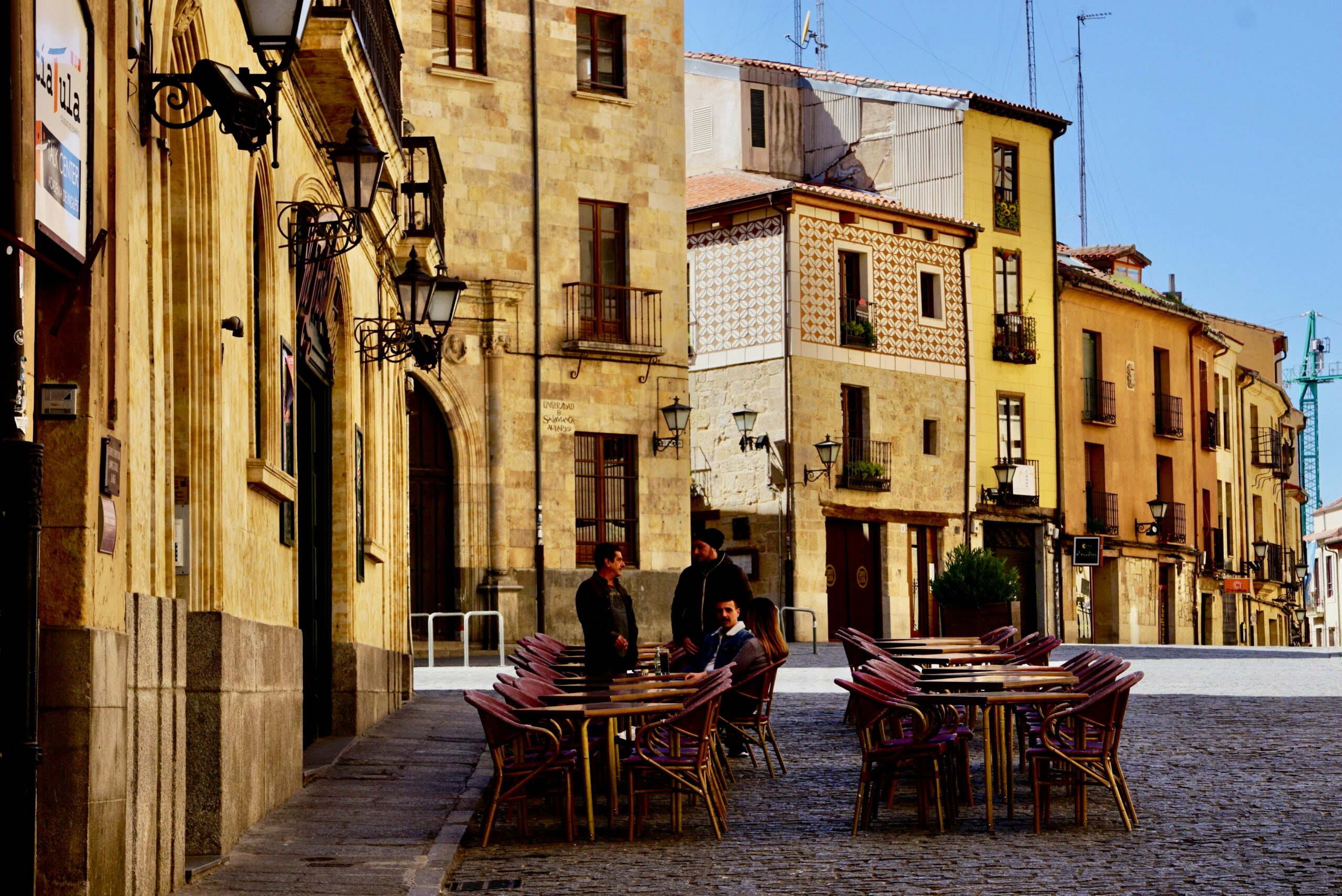
Introduction
Walking around a neighborhood is one of the best ways to practice Spanish in real life. This article gathers commonly used phrases, useful vocabulary, and short dialogues you can use when asking for directions, chatting with neighbors, or shopping locally. Learn natural expressions, pronunciation tips, and situational notes to feel confident exploring Spanish-speaking neighborhoods.
- Basic greetings and small talk on the street
- Asking for directions
- Asking about nearby services and shops
- Describing locations and landmarks
- Buying things while walking
- Short neighborhood dialogues
- Pronunciation tips and false friends
- Useful idioms and neighborly phrases
- Safety and emergency phrases
- Practical tips for neighborhood interactions
- Conclusion
Basic greetings and small talk on the street
When you first encounter someone in a neighborhood, simple greetings and polite phrases create friendly interactions. Use them to start conversations with shopkeepers, neighbors, or people on the sidewalk.
Hola — Hello
Hola, buenos días — Good morning
Buenas tardes — Good afternoon
Buenas tardes — Good afternoon (used in the afternoon)
¿Cómo estás? — How are you?
¿Cómo estás? is informal; use ¿Cómo está? with strangers you should address formally.
Mucho gusto — Nice to meet you
Mucho gusto is useful when you meet a neighbor for the first time or introduce yourself to someone new.
Polite phrases and courtesies
Politeness matters in everyday interactions. Short phrases help you appear respectful and friendly.
Por favor — Please
Por favor is used in requests at stores, kiosks, and when asking for help.
Gracias — Thank you
Gracias is essential; you can say muchas gracias to mean thank you very much.
Disculpe — Excuse me (to get attention or pass by)
Disculpe is polite when trying to get by someone in a narrow sidewalk or when addressing a stranger.
Asking for directions
Asking for directions is a frequent need while exploring a neighborhood. Learn the key question patterns and directional words to navigate confidently.
Essential question forms
¿Dónde está …? — Where is …?
Use this for singular places: ¿Dónde está la farmacia?
¿Dónde están …? — Where are …?
Use this for plural places: ¿Dónde están los baños?
¿Cómo llego a …? — How do I get to …?
¿Cómo llego a la estación? is a natural way to ask for detailed directions.
Directional vocabulary
a la derecha — to the right
a la derecha is used when someone points you toward a turn.
a la izquierda — to the left
a la izquierda is used for left turns.
recto — straight ahead
recto or todo recto means keep going straight.
la esquina — the corner
la esquina helps when directions reference street corners.
la cuadra — the block
la cuadra (or la manzana in some countries) is useful when someone says go two blocks.
Sample direction exchanges
Short dialogues mimic real interactions. Note the natural brevity of native responses.
Person A: Disculpe, ¿cómo llego al supermercado?
Person B: Siga todo recto dos cuadras, luego gire a la derecha. Está al lado de la panadería.
Key words: siga (continue), gire (turn), al lado de (next to), enfrente de (in front of).
Asking about nearby services and shops
Neighborhood walks often involve finding a café, ATM, bakery, or other local services. These phrases let you ask quickly and understand common replies.
Common service questions
¿Hay un/una … cerca? — Is there a … nearby?
Example: ¿Hay un cajero automático cerca?
¿Dónde puedo encontrar …? — Where can I find …?
Use for things like groceries, toiletries, or a pharmacy: ¿Dónde puedo encontrar una farmacia?
¿A qué hora abre/cierra …? — What time does … open/close?
Ask about hours: ¿A qué hora cierra la librería?
Vocabulary for shops and services
la cafetería — the café
la cafetería is a casual place to say I’m looking for a coffee.
la panadería — the bakery
la panadería often appears in directions and neighborhood talk.
el banco / el cajero automático — the bank / ATM
Use el cajero automático when you need cash quickly.
la farmacia — the pharmacy
la farmacia is key for medicine or personal items.
Describing locations and landmarks
People often use landmarks rather than street names. Learn how to describe where something is using relative location phrases.
al lado de — next to
al lado de is used to describe proximity: La tienda está al lado de la iglesia.
en frente de — in front of
en frente de describes facing something: El parque está en frente de la plaza.
detrás de — behind
detrás de is used when something is hidden from the main street.
entre — between
Use to say between two landmarks: La boutique está entre el banco y la farmacia.
Buying things while walking
Neighborhood shopping is casual and conversational. Use short phrases when entering shops, asking for items, or paying.
Entering and asking
Buenos días, ¿tiene …? — Good morning, do you have …?
Use to ask for specific items: Buenos días, ¿tiene pan sin gluten?
¿Cuánto cuesta? — How much does it cost?
¿Cuánto cuesta? is standard for finding the price of an item.
Paying and quantities
Quisiera — I would like
Quisiera is polite: Quisiera un café, por favor.
Solo efectivo / ¿Aceptan tarjeta? — Cash only / Do you accept cards?
Ask about payment method: ¿Aceptan tarjeta?
Una porción / una unidad — one serving / one unit
Use when specifying amounts: Quisiera una porción de empanadas.
Short neighborhood dialogues
Practice with short exchanges that feel natural. These examples show how locals speak in everyday situations.
Person A: Hola, ¿sabe si hay un parque por aquí?
Person B: Sí, hay un parque a dos cuadras. Siga recto y verá el gran roble.
Person A: Perdón, ¿esta calle va hacia el centro?
Person B: No, esta calle es paralela. Tome la cuarta a la izquierda y llegará al centro.
Pronunciation tips and false friends
Pronunciation can be simple if you focus on a few patterns. Spanish vowels are consistent, and consonants like r and rr require attention.
Tip: Pronounce vowels clearly — a as in father, e as in bet, i as in machine, o as in for, u as in rule. Soft r in words like pero rolls slightly; double r as in perro is trilled.
Watch out for false friends that look like English words but differ in meaning. For example, parada means bus stop, not parade. When asking for public transport, use parada rather than assuming parade.
Useful idioms and neighborly phrases
Idioms add local color and make your Spanish sound more natural. These are friendly phrases you might hear in a neighborhood.
¿Qué tal? — How’s it going?
¿Qué tal? is an informal greeting among neighbors.
¡Nos vemos! — See you later!
¡Nos vemos! is common when leaving someone on the street.
Cuídate — Take care
Say Cuídate when saying goodbye after a brief chat.
Safety and emergency phrases
While walking, you should also know basic safety phrases for emergencies or if you need help from someone nearby.
Necesito ayuda — I need help
Use Necesito ayuda in urgent but non-violent situations, like getting lost or needing directions to a clinic.
Llame a la policía / ambulancia — Call the police / ambulance
Use in true emergencies; people will understand and act quickly.
Me perdí — I’m lost
Me perdí is the simplest way to tell someone you need directions back to a familiar point.
Practical tips for neighborhood interactions
Beyond memorizing phrases, apply practical habits to improve interactions and learning.
1. Smile and use eye contact — friendly body language goes a long way.
2. Repeat key words from the response to confirm understanding: So, tengo que ir a la izquierda means I repeat left to verify.
3. Learn local variations — words differ across countries: cuadra vs manzana for block, or pluma vs bolígrafo for pen.
4. Carry a small list of neighborhood words: mercado, farmacia, estación, banco. Quick reference avoids delays.
Conclusion
Knowing these phrases will help you navigate a neighborhood, ask for directions, shop locally, and connect with people. Practice short dialogues, focus on polite forms, and learn local vocabulary variations. With a few confident phrases, walking around a Spanish-speaking neighborhood becomes an opportunity for real conversation and learning.