Introduction
Learning Spanish vocabulary effectively requires understanding not just the basic translation of words, but their cultural context, pronunciation, and practical usage in everyday conversation. The word plaza represents one of the most fundamental concepts in Spanish-speaking cultures, embodying much more than a simple public space. This comprehensive guide will explore every aspect of this essential Spanish term, from its etymological roots to its modern applications across different Spanish-speaking regions.
Whether you’re a beginner Spanish learner or looking to deepen your understanding of cultural vocabulary, mastering the word plaza will enhance your ability to navigate Spanish-speaking environments and engage in meaningful conversations about urban spaces, community gathering places, and architectural features. Understanding this word opens doors to discussing city planning, tourism, directions, and social activities that are central to Hispanic culture worldwide.
Meaning and Definition
Primary Definition and Core Meaning
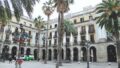
The Spanish word plaza primarily refers to a public square or open space in a city or town, typically surrounded by buildings and serving as a central gathering place for the community. This architectural and social concept holds deep significance in Spanish and Latin American urban planning, representing the heart of civic life where people congregate for social, commercial, and cultural activities.
In its most fundamental sense, a plaza functions as an outdoor room within the urban fabric, designed to facilitate human interaction and community engagement. These spaces often feature fountains, monuments, benches, and landscaping elements that make them attractive and functional for various uses throughout the day and across different seasons.
Etymology and Historical Development
The word plaza derives from the Latin term platea, which originally meant a broad street or courtyard. This Latin root also gave rise to similar words in other Romance languages, such as the French place and Italian piazza. The evolution of the term reflects the historical importance of public gathering spaces in Roman urban planning, a tradition that was carried forward through medieval Spanish cities and later exported to the Americas during the colonial period.
During the Spanish colonial era, the establishment of a central plaza became a fundamental requirement for new settlements. The Laws of the Indies, a comprehensive set of regulations governing colonial urban development, mandated that every new town must have a central square that would serve as the focal point for religious, governmental, and commercial activities. This historical mandate explains why virtually every city and town in Latin America features a prominent central plaza.
Extended Meanings and Modern Usage
Beyond its primary meaning as a public square, the word plaza has evolved to encompass several related concepts in modern Spanish usage. In commercial contexts, it can refer to a shopping center or mall, particularly in Latin American countries where terms like plaza comercial are commonly used. Additionally, the word can denote a parking space, as in plaza de aparcamiento, or a position or job opening, as in plaza de trabajo.
In educational and professional contexts, plaza frequently refers to available positions or slots, such as teaching positions in schools or spots in competitive programs. This usage reflects the concept of a designated space or place, whether physical or metaphorical, that can be occupied or filled by an individual.
Usage and Example Sentences
Basic Usage in Context
Understanding how to use plaza correctly in sentences requires familiarity with common phrases and constructions that native speakers employ in everyday conversation. Here are comprehensive examples that demonstrate various applications of the word:
La plaza del pueblo está llena de gente durante los fines de semana.
The town square is full of people during weekends.
Nos encontramos en la plaza central a las cinco de la tarde.
We will meet in the central square at five in the afternoon.
El mercado se instala en la plaza todos los jueves por la mañana.
The market sets up in the square every Thursday morning.
Mi abuela siempre va a caminar por la plaza después de cenar.
My grandmother always goes for a walk around the square after dinner.
La nueva plaza comercial tiene más de cien tiendas diferentes.
The new shopping plaza has more than one hundred different stores.
Advanced Usage Examples
El ayuntamiento está construyendo una plaza de aparcamiento subterráneo.
The city hall is building an underground parking lot.
Se ha abierto una plaza de profesor de matemáticas en el instituto.
A mathematics teacher position has opened up at the high school.
La plaza de toros de Madrid es una de las más famosas del mundo.
The bullring in Madrid is one of the most famous in the world.
Durante las fiestas patronales, la plaza se transforma en un escenario musical.
During the patron saint festivities, the square transforms into a musical stage.
Los niños juegan en la pequeña plaza del barrio mientras sus padres conversan.
The children play in the small neighborhood square while their parents chat.
Synonyms, Antonyms, and Word Usage Differences
Common Synonyms and Their Nuances
While plaza is the most widely used term for public squares in Spanish, several synonyms exist with subtle differences in meaning and regional usage. Understanding these variations helps learners choose the most appropriate word for specific contexts.
Plazuela refers to a small square or plaza, typically found in residential neighborhoods. This diminutive form suggests intimacy and local character, often describing spaces that serve primarily local residents rather than tourists or visitors from other areas.
Plazoleta is another diminutive form used in some regions, particularly in South America, to describe small urban squares. The choice between plazuela and plazoleta often depends on regional preferences and local linguistic traditions.
Explanada describes a large, open, flat area that may or may not be formally designed as a public space. This term is often used for broad esplanades or terraces, particularly those with scenic views or those designed for large gatherings.
Alameda refers to a tree-lined public walk or promenade, often featuring a central pedestrian area surrounded by trees. While similar to a plaza in function, an alameda emphasizes linear movement and natural elements rather than central gathering.
Regional Variations and Preferences
Different Spanish-speaking countries and regions show preferences for certain terms when describing public spaces. In Mexico, zócalo is commonly used to refer to the main square of a city or town, particularly the famous main square in Mexico City. This term has become so associated with Mexican culture that it’s recognized internationally.
In Argentina and Uruguay, plaza remains the standard term, but you might also hear plazoleta for smaller spaces. In Chile, plaza de armas specifically refers to the main square of a city, reflecting the colonial military origins of many settlements.
Spain tends to use plaza universally, though specific famous squares may have unique names like plaza mayor (main square) or retain historical designations that reflect their particular cultural significance.
Antonyms and Contrasting Concepts
Understanding what a plaza is not helps clarify its specific meaning and appropriate usage. Key contrasting concepts include:
Calle (street) represents linear passage routes rather than gathering spaces. While streets connect places, plazas provide destinations for social interaction and community activities.
Edificio (building) contrasts with the open, outdoor nature of a plaza. Buildings provide enclosed, private or semi-private spaces, while plazas offer open, public environments accessible to all community members.
Área privada (private area) stands in direct opposition to the public nature of plazas. Private spaces exclude general public access, while plazas welcome community use and social interaction.
Pronunciation and Accent
Standard Pronunciation Guide
Correct pronunciation of plaza is essential for effective communication in Spanish. The word consists of two syllables: pla-za, with the stress falling on the first syllable. The International Phonetic Alphabet (IPA) transcription is [ˈpla.sa], which provides a precise guide for non-native speakers.
The initial consonant cluster pl requires careful attention, as this combination can be challenging for English speakers. The p sound should be unaspirated, meaning no puff of air should accompany its pronunciation, unlike the English p in words like plaza when adopted into English.
The vowel a in both syllables should be pronounced as a clear, open central vowel [a], similar to the a in the English word father. This vowel sound remains consistent throughout Spanish and should not be modified or reduced as might occur in English unstressed syllables.
Regional Pronunciation Variations
While the standard pronunciation of plaza remains relatively consistent across Spanish-speaking regions, some subtle variations exist that learners should recognize. In most of Spain, the z is pronounced as a voiceless interdental fricative [θ], similar to the th sound in the English word think. This pronunciation is known as distinción and is characteristic of Peninsular Spanish.
In Latin America and some parts of southern Spain, the z is pronounced as [s], identical to the s sound in English see. This pronunciation pattern is called seseo and is the dominant form throughout the Americas. For learners, either pronunciation is acceptable, but consistency within a chosen regional variety is important.
The stress pattern remains constant across all varieties of Spanish, with the emphasis always falling on the first syllable. This consistent stress pattern makes plaza relatively easy to pronounce correctly once the basic sound patterns are mastered.
Common Pronunciation Mistakes
English speakers commonly make several pronunciation errors when learning to say plaza in Spanish. The most frequent mistake involves pronouncing the word with English phonetic patterns, particularly stressing the second syllable or modifying the vowel sounds to match English expectations.
Another common error involves over-aspirating the initial p sound, which creates an unnatural pronunciation that marks the speaker as non-native. Practice producing the p without the accompanying puff of air that characterizes English p sounds.
The vowel sounds also require attention, as English speakers may tend to reduce the final a to a schwa sound [ə], as commonly occurs in English. In Spanish, both vowels should maintain their full, clear [a] quality regardless of stress position.
Native Speaker Nuance and Usage Context
Cultural Significance and Social Context
For native Spanish speakers, the concept of plaza carries deep cultural and social significance that extends far beyond its literal definition as a public space. These areas represent the heart of community life, serving as venues for everything from daily social interaction to major cultural celebrations and political gatherings.
In traditional Hispanic culture, the plaza functions as an outdoor living room for the entire community. Families gather there in the evenings, children play while adults socialize, and various generations interact in ways that strengthen community bonds. This social function makes plazas essential elements of cultural identity and community cohesion.
During religious festivals, national holidays, and local celebrations, plazas transform into venues for collective expression and cultural preservation. These events reinforce the role of the plaza as a space where individual identity merges with community belonging, creating shared memories and experiences that bind people together across generations.
Formal and Informal Usage Patterns
Native speakers adjust their use of plaza and related terminology based on the formality of the situation and their relationship with their audience. In casual conversation among friends and family, speakers might use colloquial expressions and regional variants that reflect local linguistic preferences and cultural identity.
In more formal contexts, such as academic discussions, tourism presentations, or architectural descriptions, speakers tend to use standard terminology and may provide additional descriptive details that help non-local audiences understand the specific characteristics and significance of particular plazas.
Professional contexts, such as urban planning, real estate, or municipal administration, require precise usage that distinguishes between different types of public spaces and their specific functions within the urban environment. This technical usage demonstrates the speaker’s expertise and professional competence.
Idiomatic Expressions and Common Phrases
Spanish includes several idiomatic expressions and common phrases that incorporate the word plaza, reflecting its deep integration into the language and culture. Understanding these expressions helps learners achieve more natural and fluent communication.
Hacer la plaza in some regions refers to doing the daily shopping, particularly for fresh produce and household necessities. This expression reflects the traditional role of plazas as commercial centers where markets operated regularly.
Sacar a alguien a la plaza can mean to make something public or to expose someone’s actions to community scrutiny. This expression draws on the public nature of plazas as spaces where community members gather and share information.
Plaza de armas specifically refers to the main square of a city or town, often the original central square established during colonial times. This term appears throughout Latin America and reflects the military origins of many colonial settlements.
Modern Evolution and Contemporary Usage
Contemporary usage of plaza has evolved to encompass modern urban developments and changing social patterns. Shopping centers, parking facilities, and commercial complexes frequently incorporate the term to suggest accessibility, community gathering, and public utility.
Social media and digital communication have also influenced how people discuss and reference plazas, with hashtags, location tags, and virtual community formation often centered around specific physical plazas that serve as focal points for neighborhood identity and social organization.
Urban renewal projects and contemporary city planning continue to emphasize the importance of plaza-style public spaces, recognizing their value for community health, social cohesion, and cultural vitality. This ongoing relevance ensures that the word plaza remains current and essential in modern Spanish vocabulary.
Teaching and Learning Considerations
When teaching the word plaza to Spanish learners, effective instruction should emphasize both linguistic accuracy and cultural understanding. Students benefit from visual materials, virtual tours, and authentic cultural contexts that help them grasp the full significance of these spaces in Hispanic societies.
Practical exercises should include giving and receiving directions that reference plazas, describing community activities and events, and discussing urban planning concepts that help learners apply their vocabulary knowledge in realistic communication situations.
Advanced learners can explore historical and architectural aspects of famous plazas, analyze their role in literature and arts, and examine how these spaces reflect broader cultural values and social structures within Spanish-speaking communities.
Conclusion
Mastering the Spanish word plaza provides learners with access to a fundamental concept that extends far beyond simple vocabulary acquisition. This term represents a gateway to understanding Hispanic culture, community values, and social organization patterns that characterize Spanish-speaking societies worldwide. Through comprehensive study of its meaning, pronunciation, usage, and cultural significance, learners develop both linguistic competence and cultural awareness essential for effective communication.
The journey from basic vocabulary recognition to nuanced cultural understanding demonstrates how individual words can serve as windows into entire worldviews and social structures. As learners continue developing their Spanish proficiency, the concept of plaza will provide a constant reference point for exploring themes of community, tradition, urban life, and cultural identity that enrich their overall language learning experience and cross-cultural competence.